Most diets fail not because you chose the wrong foods — but because no one taught you how to diet. Diet Coaching uses cognitive behavioral therapy to build the thinking skills that make any healthy eating plan stick. No fads. No gimmicks. Just the psychology that works.
Five tabs, each targeting a core CBT skill. Simple, focused, and designed for daily use.
People who struggle with dieting often blame themselves — thinking they lack willpower or discipline. The real problem? They were never taught the skills of dieting. CBT provides those skills.
Cognitive behavioral therapy is a proven psychological approach based on a key insight: it's the thought that comes first. Before you reach for unplanned food, there's always a thought — "just this once," "I deserve it," "I'll start again tomorrow." CBT teaches you to catch these sabotaging thoughts and respond to them effectively, so they lose their power over your behavior.
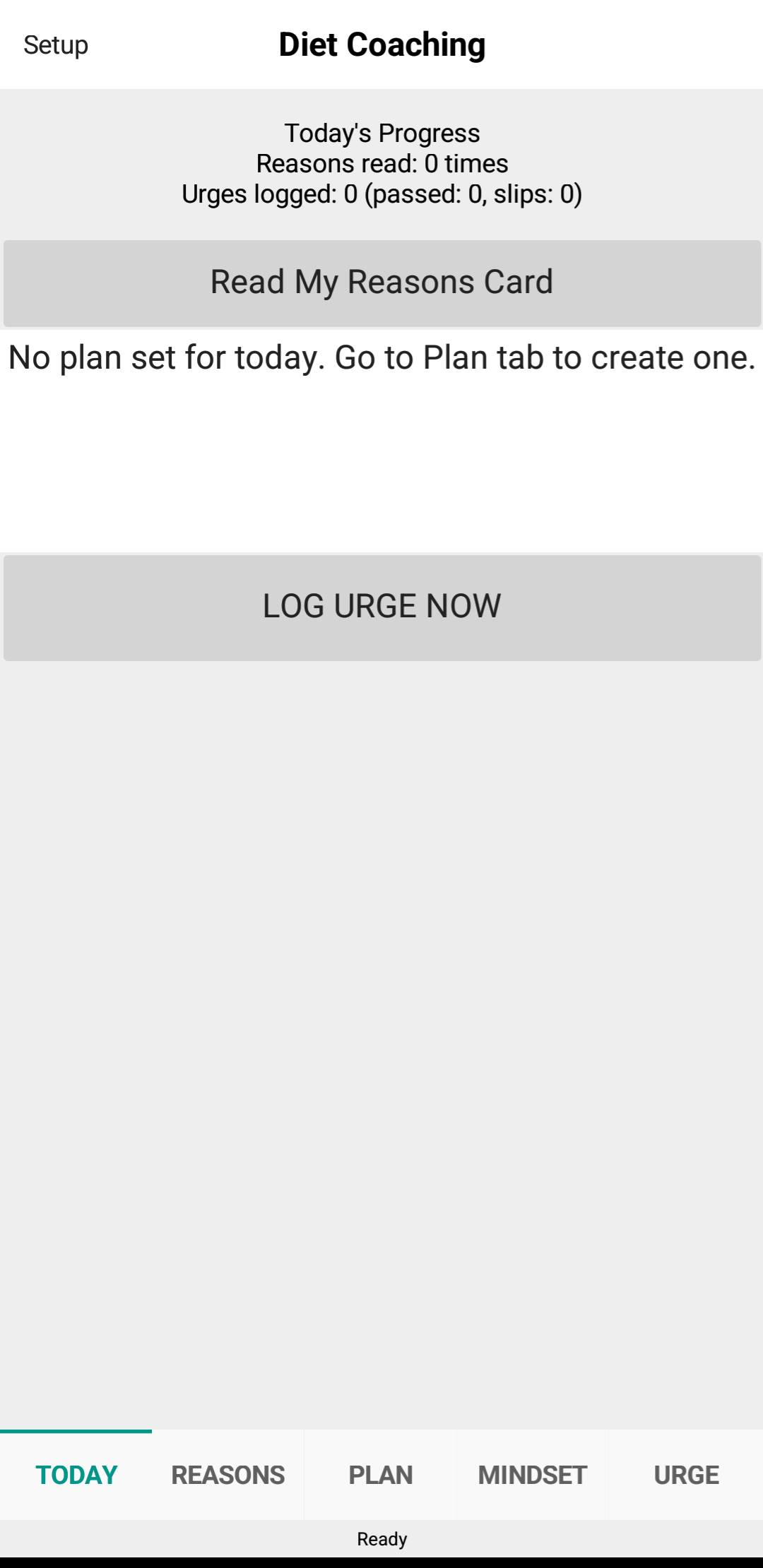
This app puts CBT techniques in your pocket. Read your personal motivation card each morning. Plan meals in advance so you decide when calm, not hungry. When a sabotaging thought pops up — like "it won't matter if I eat this" — use your response library to talk back to it. Track cravings and watch them pass. Build skills that become second nature over time.
Diet Coaching doesn't tell you what to eat — because the specific diet isn't the hard part. Whether you follow low-carb, Mediterranean, calorie counting, or any other healthy approach, what matters is your ability to stick with it. That's exactly what CBT skills give you: the mental tools to follow through on any eating plan you choose.
Research shows that people who maintain weight loss long-term think differently about food. They distinguish between true hunger and a passing desire to eat. They tolerate cravings knowing they always pass. They plan ahead for challenging situations. Diet Coaching helps you develop these same thinking patterns, one day at a time.
Six core tools grounded in cognitive behavioral therapy, designed to help you develop the psychological skills that make weight loss permanent.
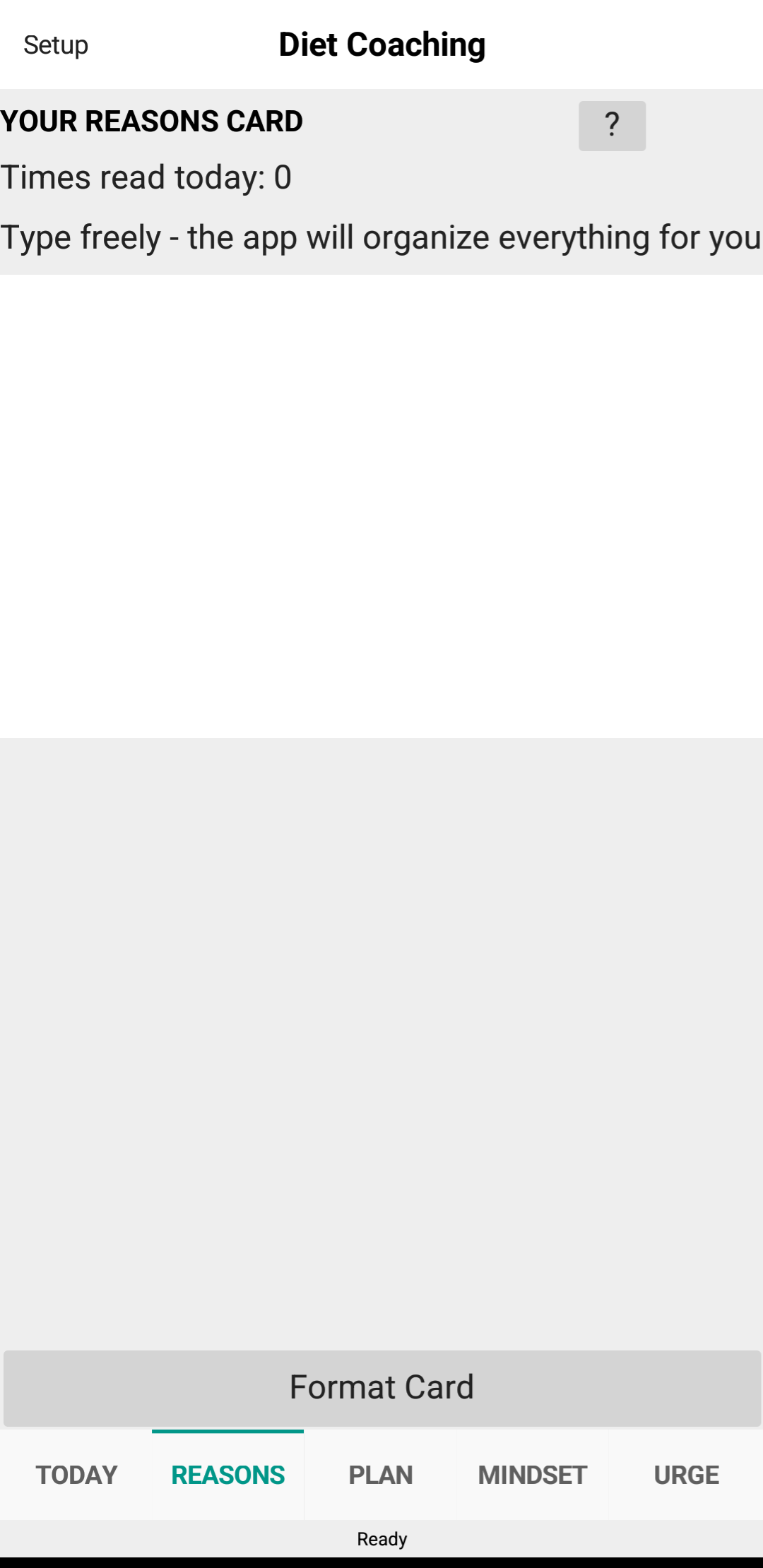
Write down every reason you want to lose weight, then read them at least twice a day. This simple practice — a cornerstone of CBT-based dieting — keeps your motivation strong and reminds you why it's worth it when temptation strikes.
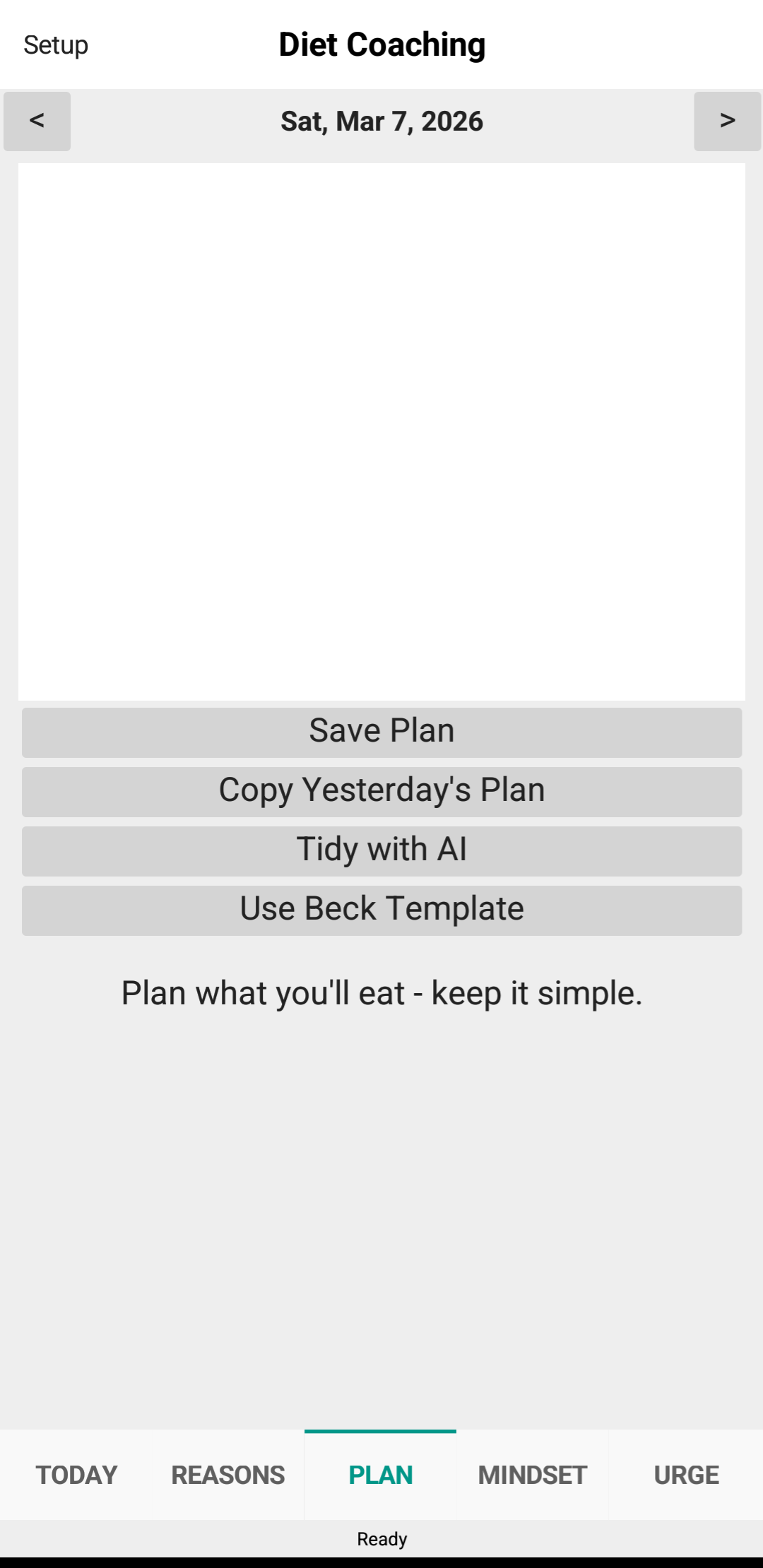
Plan tomorrow's meals the night before. When you decide what to eat in advance — while you're thinking clearly — you remove the in-the-moment struggle of choosing between what you want and what you planned. Written plans keep you accountable.
Every unplanned bite starts with a permission-giving thought: "I'll just have a little," "I can't resist this," "I'll make up for it later." Learn to catch these sabotaging thoughts the moment they arise and talk back with prepared, rational responses.
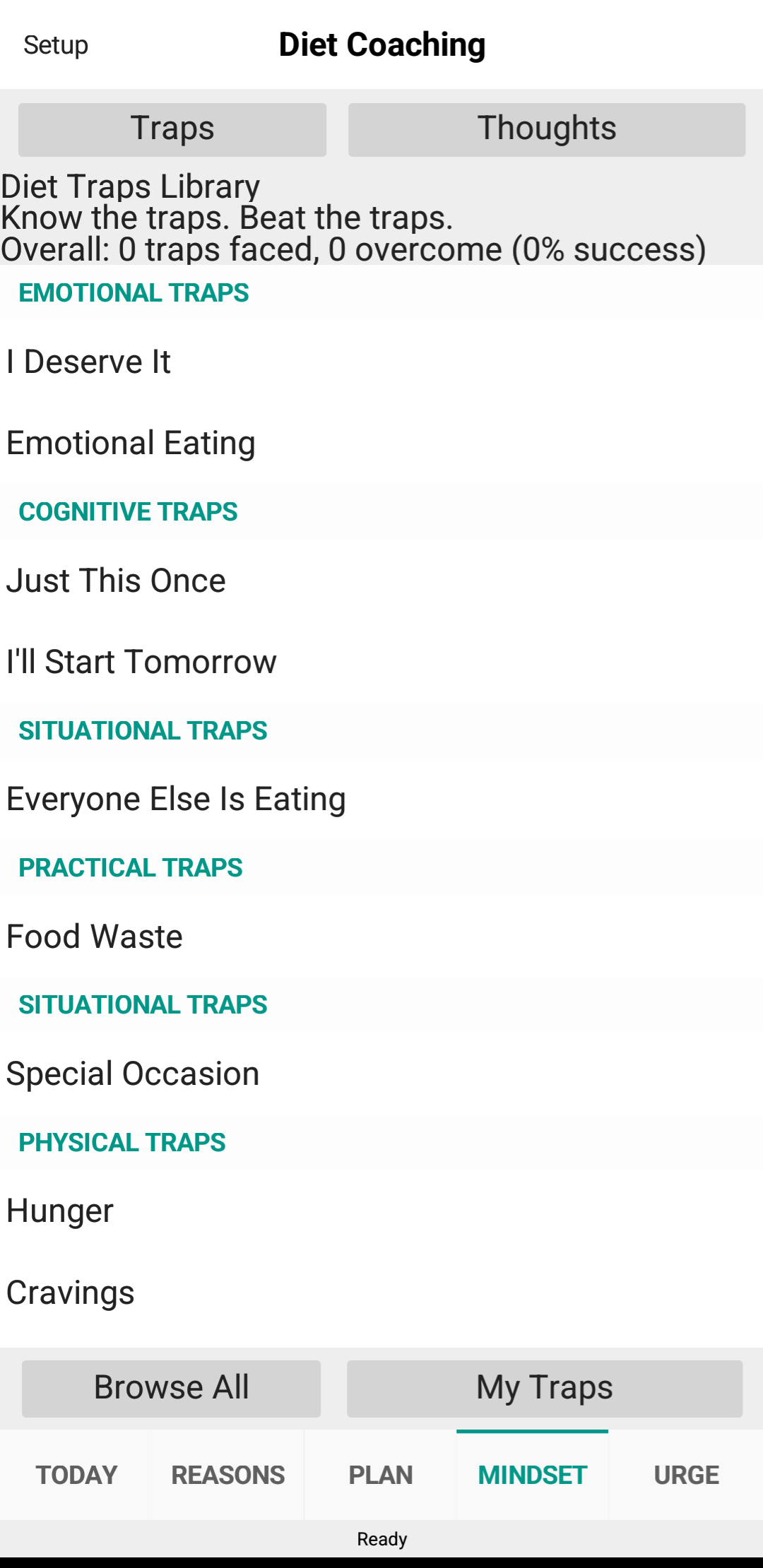
Identify common psychological traps that cause people to go off their diets — emotional eating, fooling yourself about portions, eating while standing, giving in to social pressure, and more. Know your personal traps so you can prepare for them in advance.
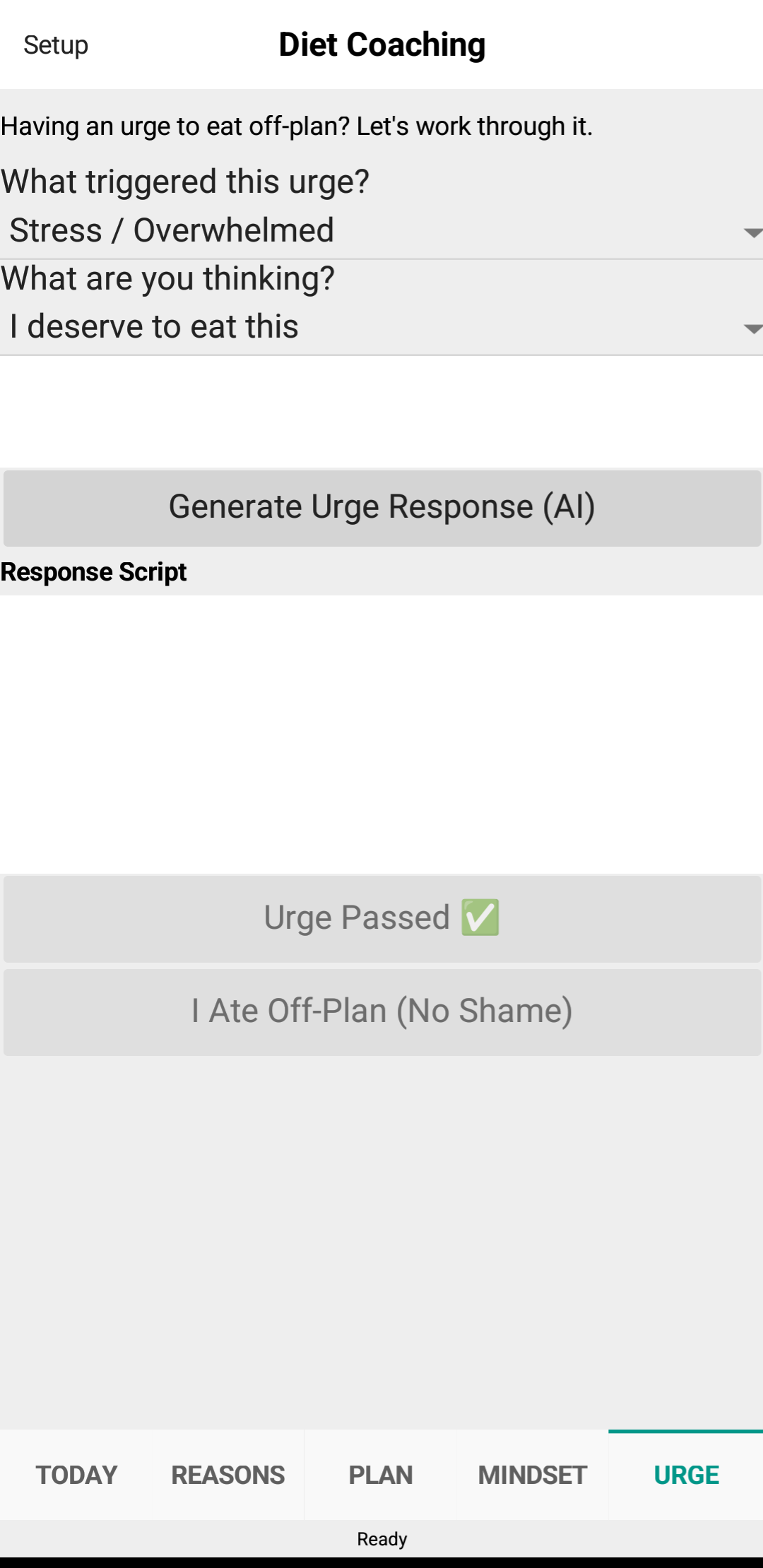
Hunger is never an emergency, and cravings always pass. When an urge hits, log the trigger and your thoughts. Over time, you'll see that urges peak and fade — usually within minutes — and your success rate will grow as your resistance strengthens.
A step-by-step wizard helps you get started: identify your personal reasons for losing weight, choose your eating approach, recognize your specific thought patterns, and prepare your environment for success — so you're ready before day one.
CBT skills become automatic through consistent daily practice. Like building a muscle, each day strengthens your ability to follow through. Here's what it looks like.
Start each morning by reading your personal reasons card. It takes 30 seconds and reconnects you with why you're doing this — especially on hard days.
Write down everything you'll eat the next day. Committing to a plan in writing holds you accountable and removes the constant decision-making that drains your resolve.
When a sabotaging thought appears — "I'll start again Monday" or "one bite won't matter" — don't argue with it. Pull up your prepared response and read it.
Cravings feel urgent but they always pass, usually within minutes. Log the urge, note the trigger, and wait. Each time you ride one out, your confidence grows.
Restaurants, parties, stressful days — anticipate difficult situations before they happen. When you have a plan ready, you stay in control instead of reacting.
Notice and acknowledge every positive choice you make. Building confidence through self-credit is essential — it counteracts the self-criticism that derails so many diets.
Here's what most diets get wrong: they tell you what to eat but never teach you how to keep eating that way. The missing piece isn't nutritional knowledge — it's the ability to handle the thoughts, feelings, and situations that pull you off track.
Cognitive behavioral therapy, developed by Dr. Aaron Beck and applied to weight management by Dr. Judith Beck, is built on a powerful insight: a thought always comes before the problematic behavior. Before every unplanned snack, there was a thought giving you permission — "I can't resist," "I've had a hard day," "it's only a small piece." These sabotaging thoughts feel convincing in the moment, but they can be identified, challenged, and replaced with more helpful responses.
CBT also addresses the deeper patterns that make dieting hard: low tolerance for hunger, difficulty distinguishing real hunger from a desire to eat, emotional eating, all-or-nothing thinking after a slip, and the tendency to give up rather than get back on track. Studies of people who successfully maintain significant weight loss show they share common psychological skills — not a common diet.
Diet Coaching brings these evidence-based techniques to your phone, structured as a daily practice that builds these skills gradually until they become your natural way of thinking about food.
This app implements evidence-based CBT techniques for weight management, drawing inspiration from:
We strongly recommend reading the original Beck Diet Solution book for a comprehensive understanding of this approach.
Start building the psychological skills for lasting weight loss. Free to download.
Android 8.0 or later • Free • No account required • Your data stays on your device